
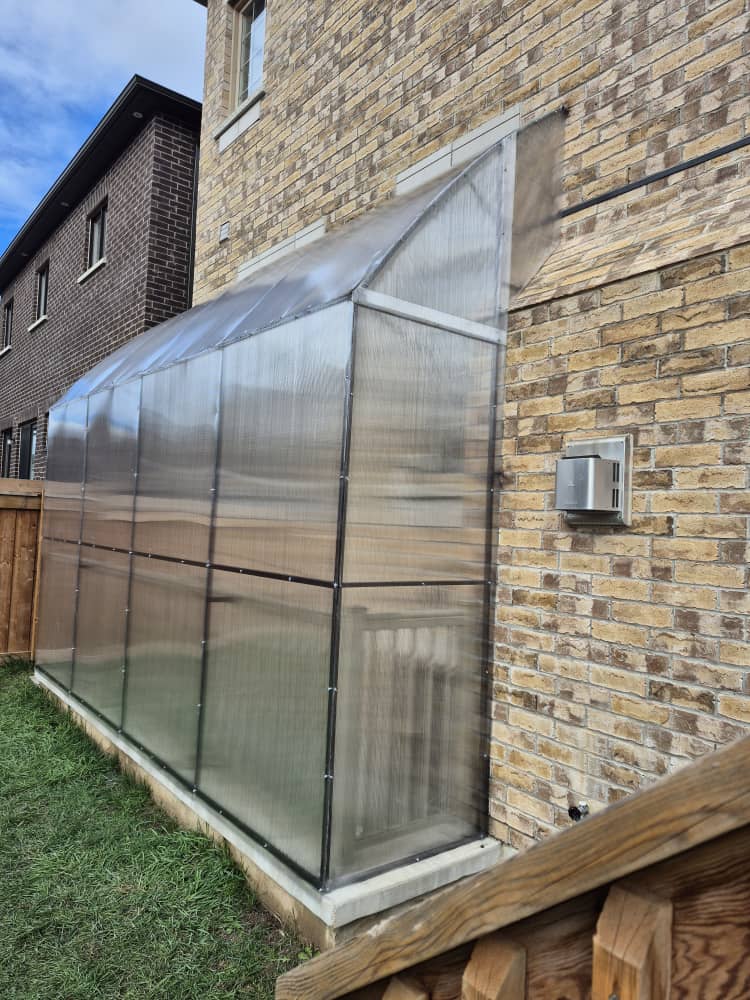
Comparison of Metal vs. Polycarbonate Awnings in Cold Climates
Which option is better for snowy regions?
In cold-climate areas, long winters and heavy snowfall make awning material selection a highly sensitive decision. If the material is not suitable, the weight of snow and freezing conditions can lead to bending or even complete structural failure. Below, we take a detailed look at the differences between metal and polycarbonate awnings.
Metal Awnings in Cold Regions
Metal awnings are considered one of the most reliable options in areas with heavy snowfall due to their high strength and load-bearing capacity. With proper sloped design, snow can slide off the surface quickly. They offer long service life and are an excellent choice for car parking shelters, building entrances, and industrial covers.
However, metal absorbs cold quickly, causing the awning’s surface to freeze during winter, which may result in icicle formation and hazardous falling ice. Additionally, without proper coating and anti-rust protection, continuous moisture and freezing can lead to corrosion. Regular maintenance and inspection of joints and fasteners are essential to ensure durability.
Polycarbonate Awnings in Cold Regions
Polycarbonate is a lightweight material with better thermal insulation compared to metal, making it a suitable performer in cold climates. Its flexibility allows it to withstand temperature variations with less likelihood of cracking or breaking. Polycarbonate sheets also allow light transmission, keeping the space underneath bright—making them ideal for terraces, patios, and semi-covered residential areas.
However, in regions with very heavy snowfall, thicker or double-layer polycarbonate sheets should be used to handle the load efficiently. Compared to metal, polycarbonate may develop surface scratches or become slightly cloudy over time, so proper cleaning and maintenance are required.
Which Awning Works Best in Cold Climates?
If maximum load-bearing capacity and long-term structural durability are your main priorities, metal awnings are the best option.
But if you value light transmission, lightweight structure, and better insulation, polycarbonate awnings are more suitable. Especially when installed with a reinforced metal frame, double-layer polycarbonate roofing can also perform very well under heavy snow loads.
For many cold-region projects, a hybrid solution—a metal framework with polycarbonate panels—is a smart choice because it provides the benefits of both materials simultaneously.
Key Installation Tips for Snowy Regions
• Provide adequate slope to ensure quick snow discharge
• Use reinforced profiles and strong fasteners
• Select thick or double-layer polycarbonate if needed
• Apply powder coating and anti-rust treatment on metal structures
• Install a proper drainage path and ice-resistant gutters
Conclusion
Metal awnings are more recommended for parking areas and building entrances, while polycarbonate awnings are excellent for patios, light wells, and semi-covered residential spaces.
Ultimately, the best choice depends on your intended use, snowfall intensity, and budget—these factors will determine which awning will deliver the highest performance for you.
No comment